False Alarm Reduction Strategies
Comprehensive approaches to minimizing false alarms while maintaining security effectiveness
2.1 Technical Solutions
The evolution of false alarm reduction strategies has been fundamentally transformed by advances in sensor technology, data processing capabilities, and artificial intelligence applications. Modern technical solutions move beyond simple threshold-based detection to incorporate sophisticated analysis of multiple data streams, contextual awareness of environmental conditions, and machine learning algorithms that continuously improve detection accuracy based on historical performance. These technical advances enable alarm systems to distinguish between genuine security threats and the myriad benign events that trigger traditional sensors, dramatically reducing false alarm rates while maintaining or even improving detection of actual security breaches.
Advanced sensor fusion represents one of the most promising technical approaches to false alarm reduction. Rather than relying on individual sensors operating in isolation, sensor fusion combines data from multiple sensor types to create a more complete and accurate picture of events within the protected area. For example, a motion detection event becomes much more reliable when correlated with door sensor activation, video analytics confirming human presence, and acoustic signatures consistent with footsteps or voices. This multi-sensor approach dramatically reduces false alarms because the probability of multiple independent sensors simultaneously generating false positives for the same event is exponentially lower than the false alarm rate of any individual sensor.
Artificial intelligence and machine learning technologies have opened entirely new possibilities for false alarm reduction by enabling systems to learn from experience and adapt to the specific characteristics of each protected environment. Machine learning algorithms can analyze patterns of sensor activations over time, identifying normal baseline activity patterns and flagging deviations that may represent genuine security threats. These systems can learn to recognize the sensor signatures of common false alarm triggers like pets, cleaning staff, HVAC system effects, and environmental factors, automatically filtering out these benign events while remaining sensitive to unusual patterns that may indicate security breaches. The continuous learning capability means that system performance improves over time as the algorithms accumulate more data about the specific environment they protect.
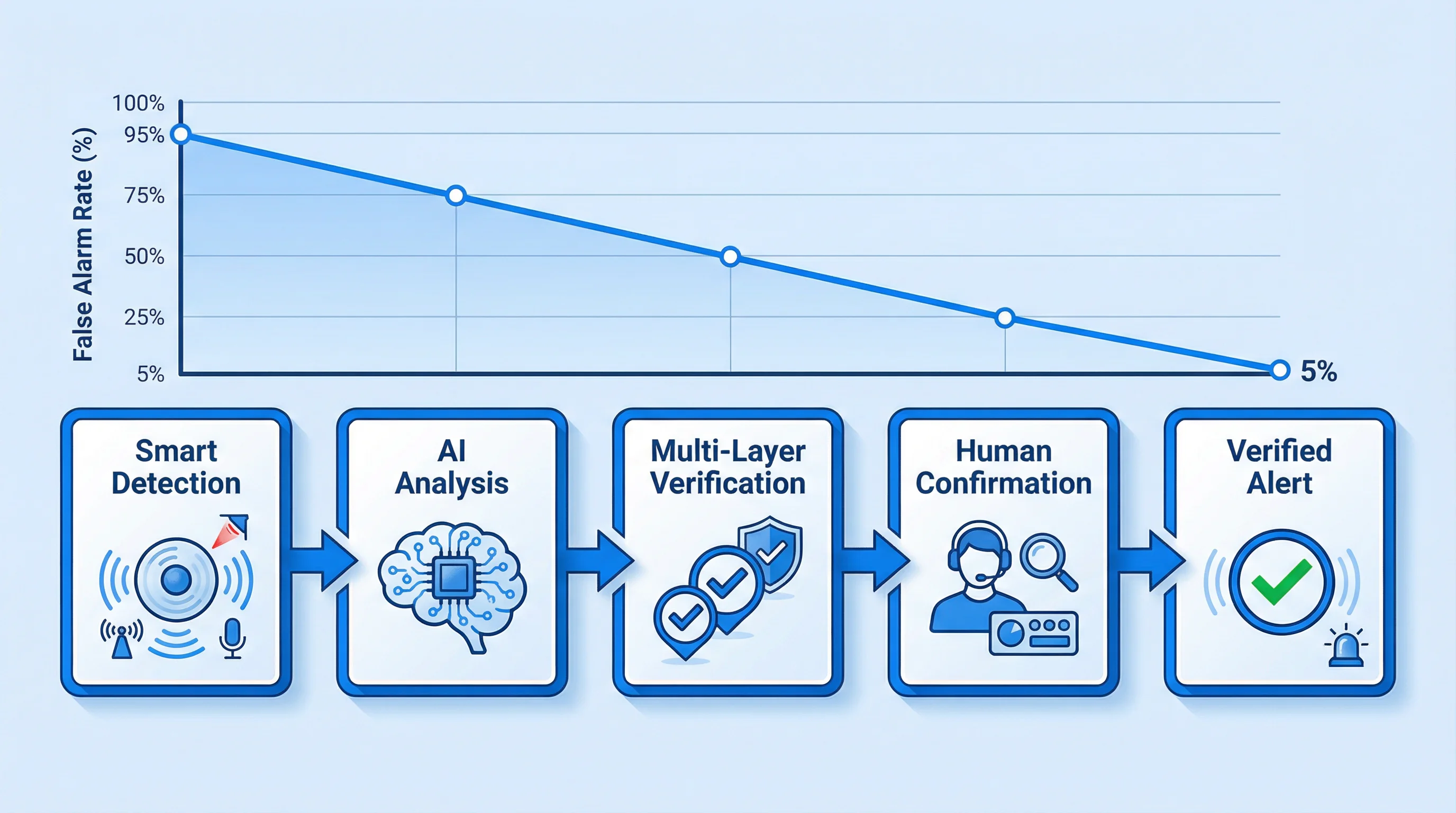
Figure 2.1: Multi-Stage False Alarm Reduction Process Flow
2.2 Operational Improvements
While technical solutions provide powerful tools for false alarm reduction, operational improvements in system deployment, configuration, and maintenance play an equally critical role in achieving reliable alarm system performance. The most sophisticated technology cannot overcome fundamental operational deficiencies in how systems are installed, configured, and managed over their operational lifetime. Effective false alarm reduction requires a comprehensive operational framework that addresses every phase of the system lifecycle from initial site assessment through ongoing optimization based on performance data.
Professional site assessment and system design represent the foundation of operational false alarm reduction. Before any equipment is installed, qualified security professionals must conduct thorough analysis of the protected environment including building layout and construction characteristics, normal usage patterns and traffic flows, environmental factors that may affect sensor performance, existing security infrastructure and integration requirements, and specific security threats and vulnerabilities that the system must address. This assessment enables system designers to select appropriate sensor types and locations, configure detection zones that align with actual usage patterns, set sensitivity levels appropriate for each specific environment, and establish verification protocols that balance security effectiveness with false alarm minimization.
Installation quality and technician training have profound impacts on false alarm rates that often persist throughout the system's operational life. Improperly installed sensors, incorrect sensitivity settings, inadequate testing and commissioning, and failure to properly document system configuration all contribute to elevated false alarm rates that may not become apparent until the system has been in operation for some time. Addressing these installation-related issues requires comprehensive technician training programs that go beyond basic equipment installation to cover proper site assessment, environmental factors affecting sensor performance, testing and verification procedures, and documentation requirements. Quality assurance processes including independent verification of installations and periodic audits help ensure that installation standards are consistently maintained across all deployments.
| Strategy Category | Implementation Complexity | Expected False Alarm Reduction | Time to Full Effectiveness |
|---|---|---|---|
| Advanced Sensor Fusion | High | 60-75% | Immediate |
| AI Pattern Recognition | Very High | 70-85% | 3-6 months (learning period) |
| Professional Site Assessment | Medium | 40-55% | Immediate |
| Enhanced User Training | Low | 30-45% | 2-4 weeks |
| Video Verification | Medium | 80-90% | Immediate |
2.3 Integration Approaches
The most effective false alarm reduction strategies recognize that alarm systems do not operate in isolation but must integrate seamlessly with broader security infrastructure, building management systems, and emergency response protocols. Integration approaches that connect alarm systems with video surveillance, access control, environmental monitoring, and other security technologies create opportunities for cross-verification and contextual analysis that dramatically improve alarm reliability. These integrated systems can leverage information from multiple sources to build comprehensive situational awareness that enables much more accurate threat assessment than any single system operating independently.
Video verification integration represents perhaps the single most effective false alarm reduction technology currently available. By automatically capturing video footage when alarm events occur and making that footage immediately available to monitoring personnel, video verification enables rapid visual confirmation of whether an alarm represents a genuine security threat. This capability transforms the alarm verification process from a time-consuming investigation requiring physical response to a rapid assessment that can be completed within seconds from a remote monitoring center. Studies consistently show that video verification reduces false alarm rates by eighty to ninety percent while simultaneously improving response times for genuine security events because monitoring personnel can immediately assess threat severity and dispatch appropriate resources.
Access control system integration provides another powerful tool for false alarm reduction by enabling alarm systems to understand authorized access patterns and distinguish between legitimate entry by authorized personnel and potential security breaches. When an alarm system knows that a door opening corresponds to a valid access card presentation by an authorized user during their normal access hours, it can automatically suppress what would otherwise generate an alarm. Conversely, door openings without corresponding access control events, or access attempts outside normal hours, can trigger enhanced verification protocols. This integration is particularly valuable in commercial and institutional settings where authorized personnel regularly enter and exit protected areas throughout normal business operations.
Building management system integration enables alarm systems to account for environmental conditions and building operations that might otherwise trigger false alarms. Information about HVAC system operation, lighting schedules, elevator usage, and other building systems provides valuable context for interpreting sensor data. For example, motion sensors can be automatically adjusted when HVAC systems activate to account for air movement effects, or glass break detectors can have their sensitivity temporarily reduced during scheduled window cleaning operations. This integration requires careful coordination between security and facilities management teams but can significantly reduce environmentally-triggered false alarms while maintaining security effectiveness.
Emergency response integration ensures that false alarm reduction strategies do not inadvertently compromise the effectiveness of security responses when genuine threats occur. Integration with emergency dispatch systems, security personnel management platforms, and incident response protocols enables alarm systems to provide rich contextual information that helps responders assess situations accurately and deploy appropriate resources. This integration might include automatic transmission of video verification footage to responding officers, floor plans and access information for the affected area, historical alarm data for the location, and real-time updates as situations develop. By providing this comprehensive information, integrated systems enable faster and more effective responses to genuine security events while reducing wasted responses to false alarms.
The implementation of comprehensive integration strategies requires careful planning, significant technical expertise, and ongoing coordination between multiple systems and stakeholder groups. However, the benefits in terms of false alarm reduction, improved security effectiveness, and operational efficiency make integration a critical component of any serious false alarm reduction program. Organizations that successfully implement integrated approaches typically achieve false alarm reductions of seventy to ninety percent while simultaneously improving their ability to detect and respond to genuine security threats. This combination of reduced false alarms and enhanced security effectiveness represents the ultimate goal of modern alarm system design and the clearest path forward for an industry seeking to overcome its trust crisis.