Verification Mechanisms
Multi-layered approaches to confirming alarm authenticity before response deployment
4.1 Multi-Layer Verification
The fundamental principle underlying effective verification mechanisms is that multiple independent sources of evidence provide exponentially greater confidence in alarm authenticity than any single source alone. Multi-layer verification systems implement this principle by requiring corroboration from multiple sensors, data sources, or verification methods before classifying an alarm as verified and triggering full response protocols. This layered approach dramatically reduces false alarm rates while maintaining high sensitivity to genuine security threats, because the probability of multiple independent verification layers simultaneously generating false positives is orders of magnitude lower than the false positive rate of any individual layer.
Primary detection layer verification begins with the initial sensor activation that triggers the alarm event. Modern verification systems go beyond simple threshold-based detection to analyze the characteristics of the sensor activation itself for indicators of authenticity. For motion sensors, this might include analysis of the size, speed, and trajectory of detected movement to distinguish human intruders from pets, environmental factors, or equipment effects. For door and window sensors, verification might include analysis of the opening duration, force characteristics, and whether the opening corresponds to normal access patterns. For glass break detectors, verification analyzes both the acoustic signature and any accompanying vibration or pressure changes to confirm actual glass breakage rather than similar sounds from other sources.
Secondary verification layers add independent sources of evidence that either corroborate or contradict the primary detection. Video verification represents the most powerful secondary verification method, providing visual confirmation of the conditions that triggered the alarm. When a motion sensor activates, video verification can immediately confirm whether a person is actually present in the protected area, what they are doing, and whether their presence represents a genuine security threat. Audio verification provides another valuable secondary layer, capturing sounds associated with intrusion such as breaking glass, forced entry, or voices. Environmental sensors including temperature, humidity, and air pressure can provide additional corroborating evidence or identify environmental factors that may have triggered false alarms.
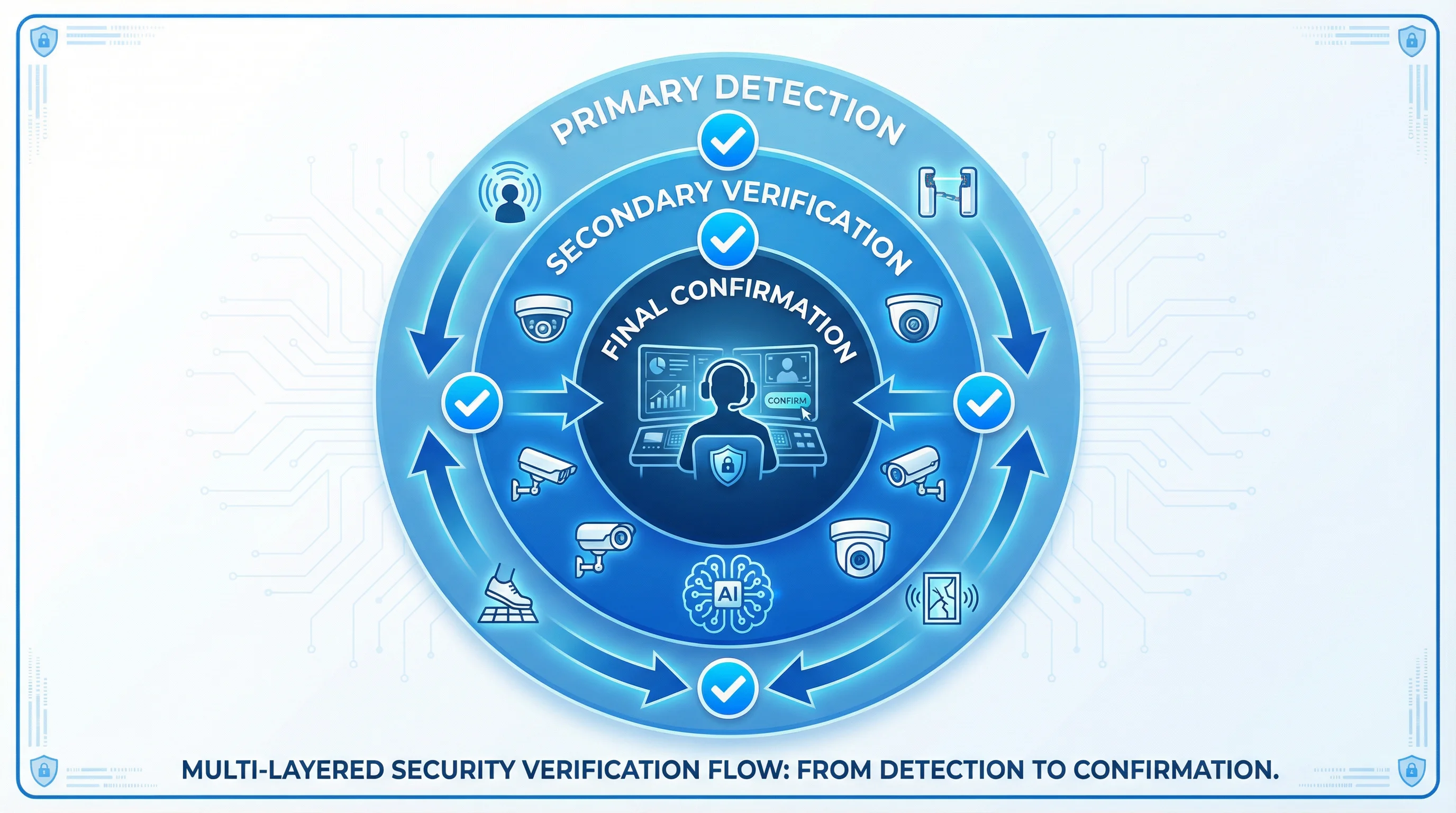
Figure 4.1: Multi-Layered Security Verification Flow from Detection to Confirmation
4.2 Real-Time Confirmation
Real-time confirmation processes enable rapid verification of alarm authenticity while maintaining the speed necessary for effective security response. Traditional verification approaches often introduced significant delays as monitoring personnel investigated alarm events through sequential processes including reviewing system logs, attempting to contact site personnel, and dispatching security patrols for physical verification. Modern real-time confirmation systems compress these verification steps into seconds rather than minutes by automating data collection and analysis, presenting integrated verification information to monitoring personnel, and enabling rapid decision-making based on comprehensive situational awareness.
Automated verification protocols execute immediately upon alarm activation, gathering and analyzing all available verification data without requiring human intervention. These protocols might include capturing video clips from all cameras with views of the alarm location, recording audio from nearby microphones, checking access control logs for authorized entry events, analyzing sensor activation patterns for consistency with genuine intrusion scenarios, and comparing current conditions to historical baseline patterns. This automated data collection and preliminary analysis happens within seconds of alarm activation, providing monitoring personnel with comprehensive verification information the moment they begin assessing the alarm event.
Human-in-the-loop verification maintains the critical role of human judgment while leveraging automation to enhance speed and accuracy. Monitoring center personnel receive alarm notifications accompanied by all automatically collected verification data presented in an integrated display that enables rapid assessment. The display might show video verification footage with the alarm trigger location highlighted, sensor activation timeline showing the sequence of events, access control data indicating any authorized personnel in the area, and AI-generated threat assessment based on automated analysis of all available data. This comprehensive presentation enables monitoring personnel to make informed verification decisions within seconds rather than the minutes required for traditional investigation processes.
4.3 Data Integration
Effective verification mechanisms require seamless integration of data from diverse sources including alarm sensors, video surveillance systems, access control platforms, environmental monitoring systems, and external data sources such as weather services and public safety databases. This integration presents significant technical challenges because these systems often use different communication protocols, data formats, and timing mechanisms. Modern verification platforms address these challenges through standardized integration frameworks that enable diverse systems to share data in real-time while maintaining the security and reliability essential for critical security applications.
Temporal synchronization ensures that data from different sources can be accurately correlated based on timing. When an alarm event occurs, the verification system must be able to retrieve video footage, access control events, and sensor data from the precise time period surrounding the alarm activation. This requires all integrated systems to maintain synchronized time references and provide mechanisms for retrieving historical data based on precise timestamps. Modern verification platforms implement network time protocol synchronization across all integrated systems and maintain buffered data streams that enable immediate retrieval of relevant data from the seconds before and after alarm events.
Spatial correlation enables verification systems to identify which sensors, cameras, and other data sources are relevant to each alarm event based on their physical locations. When a motion sensor in a specific room activates, the verification system must automatically identify cameras with views of that room, access control readers for doors providing access to the room, and other sensors in the vicinity that might provide corroborating evidence. This spatial correlation requires detailed facility mapping that associates each sensor and data source with its precise physical location and defines spatial relationships between different areas of the protected facility.
| Verification Method | Verification Speed | False Positive Reduction | Implementation Cost |
|---|---|---|---|
| Video Verification | 5-15 seconds | 85-95% | Medium |
| Audio Confirmation | 3-10 seconds | 60-75% | Low |
| Multi-Sensor Correlation | < 5 seconds | 70-85% | Medium |
| Access Control Integration | < 3 seconds | 50-65% | Low |
| AI Pattern Analysis | < 5 seconds | 75-90% | High |
Contextual enrichment adds external information that helps monitoring personnel understand the broader context of alarm events and make more informed verification decisions. This might include weather data explaining environmental factors that could trigger sensors, public safety information about incidents in the surrounding area, facility occupancy schedules indicating whether the building should be occupied, and historical alarm patterns for the specific location. This contextual information helps monitoring personnel quickly identify situations where alarms are likely to be false due to known environmental or operational factors versus situations where alarms represent genuine security concerns requiring immediate response.
The integration of these diverse data sources into unified verification platforms represents a significant technical achievement that fundamentally transforms alarm system capabilities. Organizations that successfully implement comprehensive data integration for verification purposes typically achieve false alarm reductions of eighty to ninety-five percent while simultaneously reducing verification times from minutes to seconds. This combination of dramatically reduced false alarms and faster verification enables security operations that are simultaneously more effective and more efficient, finally delivering on the promise of alarm systems that can be trusted to accurately identify genuine security threats while minimizing wasted responses to false alarms. The investment required to implement comprehensive verification mechanisms is substantial, but the operational benefits and improved security outcomes make this investment essential for any organization serious about achieving trustworthy alarm system performance.